- The Friday Mindset
- Posts
- Friday Mindset #182

Happy Friday!
Easter’s nearly with us! (We know our Welsh colleagues only have another week to go, the lucky so-and-sos…) We’ll be pinging you another newsletter, 183, on Friday 27th, then we’ll be taking a break before returning after Easter in April.
Before we start, a quick announcement: we’re filling up in the Summer for staff CPD and student sessions. There’s still some availability through May, June and July, but it’s getting pretty full now, so if you’re looking ahead to staff inset days and you fancy a session (i) introducing VESPA, or on (ii) Building Independent Learning, or (iii) Motivation, Goal-setting and Agency, or (iv) Evidence-based Revision, or (v) anything else VESPA-adjacent, get in touch at [email protected] and we’ll fit you in!
Right, let’s dive in.
Something we're reading...
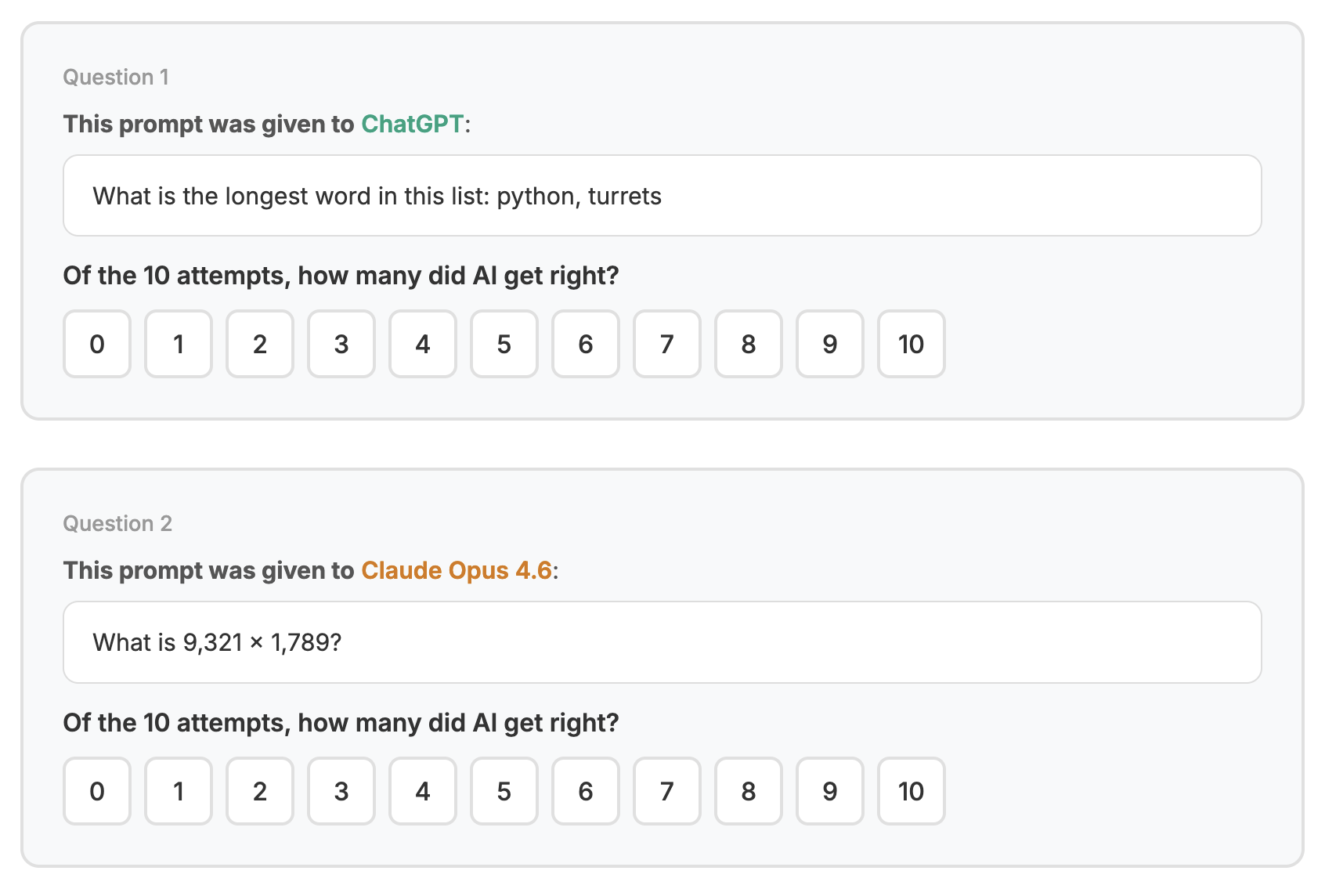
Two items of interest in the AI space this week. First, this is a bit of fun, but should also generate some discussion. It’s a quiz in which you - and more importantly, students! - have to guess how good large language models were at solving a series of problems.
For each problem, the AI models were given ten attempts, so the question is the same for each task - how many correct attempts, out of 10, were made each time?
At the end, your answers are compared to the real outcomes so you can see if you’re someone who overestimates AI’s ability, or underestimates. It’s a decent tutorial activity!
OK, next. This study of AI and cheating came to our attention a little while ago and we forgot to share it.
On first reading, there’s a lot that’s shocking and depressing about this. Yeah, we mean the percentage of American students who admit to engaging in academic dishonesty. After a bit of reflection, though, we thought let’s get real. If we’d been asked if we’d cheated in some small way back in high school - copying someone else’s homework is included for example - we’d have had to fess up. What student doesn’t spend high school borrowing ideas, stealing a few sentences that start an essay in just the right way, half-inching someone’s take and passing it off as their own, or fibbing about where a solution came from? (Though we never engaged in anything above that level, you understand…)
Before you take a look, some headlines to reflect on:
“24.27% of students reported using artificial intelligence as unauthorized aids during assessments, assignments, or homework.”
However, when the researchers dug deeper, most students weren’t using it to generate an entire response for them; the top uses were “idea generation” and “text summary.”
But some students - between 9 and 15% depending upon the type of school - are using AI to generate entire responses.
Long and short of it folks, despite the arrival of LLMs, cheating has remained broadly stable. Don’t skip the paper though, there’s loads of interesting findings. (At a push, ask ChatGTP to summarise it for you 😂…)

Something to try...
Last week we shared a video Martin recorded for a group of schools, covering reward systems that encourage students to revise effectively.
And this week we’ve got one more for you; one that’s thematically linked. This one’s a whistle-stop tour of motivation, looking at how to create a culture that promotes motivated study, as well as how individuals can motivate themselves…

Subscribe to our premium content to read the rest.
Become a paying subscriber to get access to this post and other subscriber-only content - just £5 per month or £50 per year
Already a paying subscriber? Sign In.
A subscription gets you:
- • access to 32 full and complete issues of The Friday Mindset
- • two additional issues over the summer break
- • access to our VESPA Videos library - curated clips perfect for assemblies, presentations and tutorials
Reply